


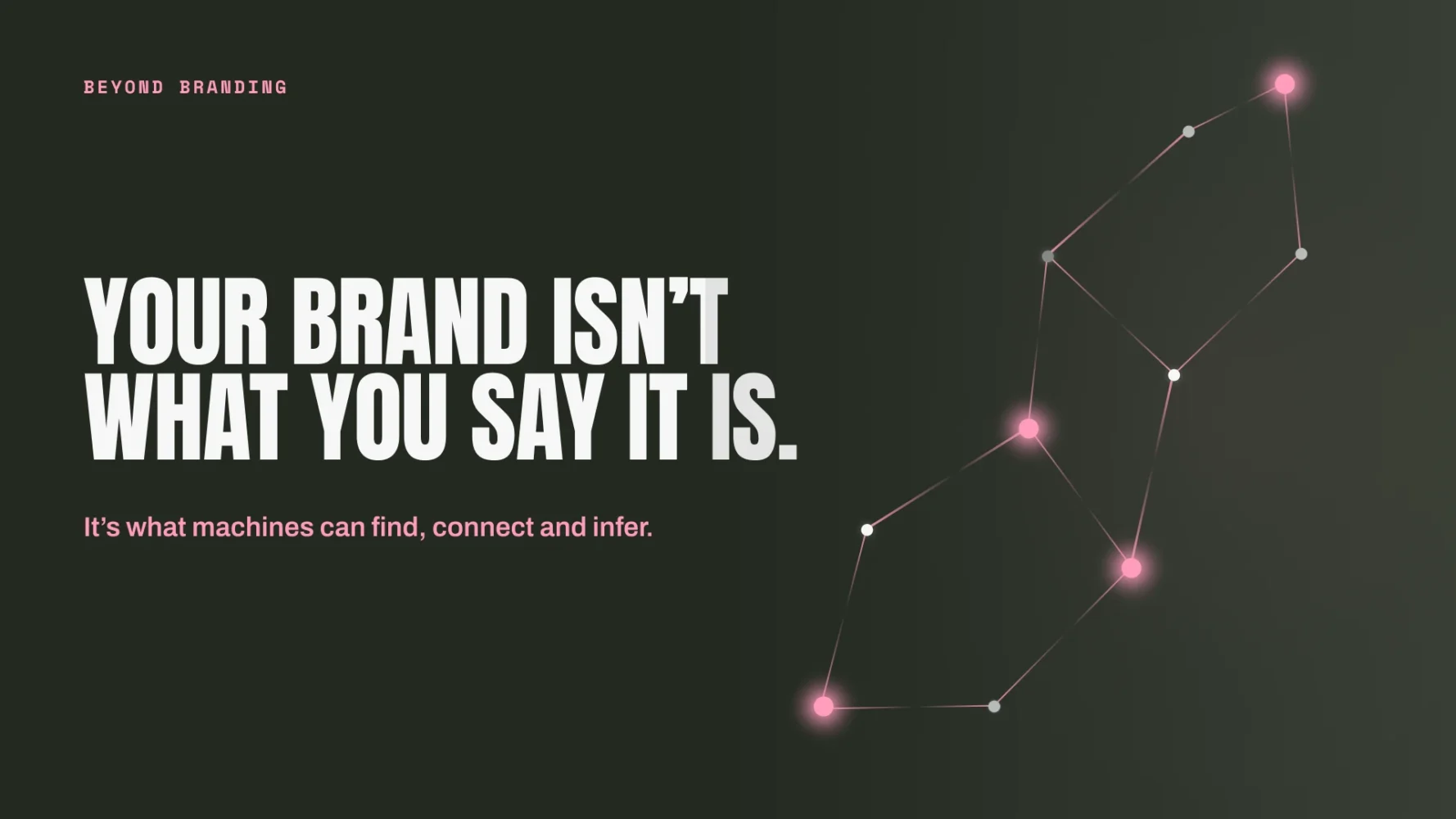

For years, businesses (ours included) have laboured hard over how their brand looks, sounds and feels. We have invested in logos, websites, tone of voice, advertising campaigns and carefully crafted messaging, all with one goal in mind: shaping perception in the minds of customers. That still matters; but it is no longer the whole picture.
Futurist Tracey Follows recently introduced the idea of the “Database Brand”, arguing that a brand today is “no longer only what the company says it is. It is what systems can find, interpret, connect, summarise and infer from everything that exists about it.”
That is a profound shift. Your website remains one of your most valuable digital assets and is often where people go to make a decision. But increasingly, AI tools such as ChatGPT, Google AI Overviews, Claude and Perplexity are helping people decide which businesses to explore in the first instance.
Online brands are becoming collections of evidence
One of the most interesting observations in Follows’ essay is that humans naturally connect the dots. Machines do not.
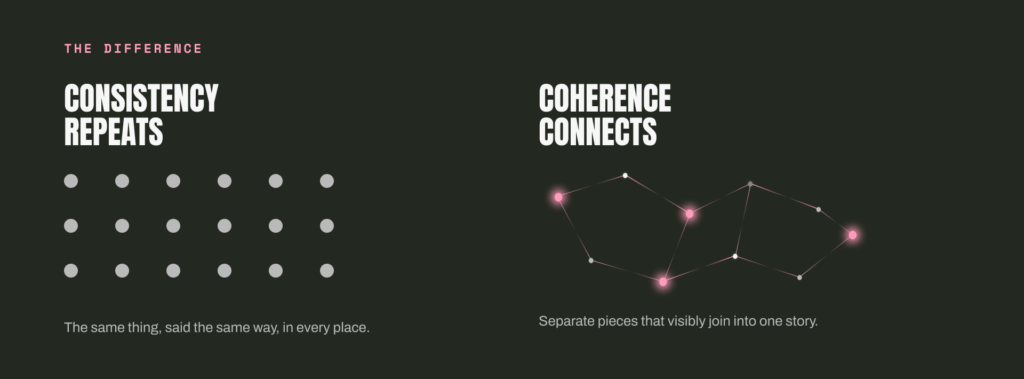
A person understands that your LinkedIn profile, podcast appearance, customer testimonials, case studies and website all tell one consistent story. AI systems simply read what is there. If those pieces are disconnected, incomplete or inconsistent, they struggle to understand who you are and why you matter. As Follows puts it, “Consistency repeats. Coherence connects.”
That distinction means that the strongest brands are no longer just consistent in their design systems or messaging. They provide connected evidence of expertise across every digital touchpoint.
Every digital asset becomes part of your brand
Your website sits at the heart of your brand, but it is no longer the only place people discover and evaluate your business.
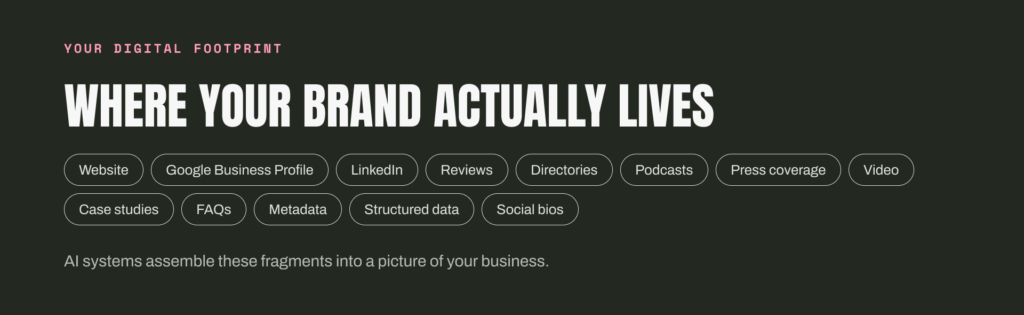
It exists across Google Business Profile, social media biographies, review platforms, directory listings, podcasts, press coverage, videos, case studies, FAQs, metadata, structured data, customer reviews and countless other places.
AI systems are assembling these fragments into a picture of your business.
If one platform says you specialise in one thing, another highlights something different and your website barely mentions either, the result is uncertainty. And uncertainty rarely earns recommendations.
This is a marketing challenge, not just an SEO one
There is a temptation to see this purely as a technical issue. Add some Schema markup. Improve your metadata. Optimise for AI search. Those things are vital, but the bigger challenge is strategic.
Do all your digital assets tell the same story? Can someone clearly understand what makes your business different? Is there enough independent evidence to support your claims? Does your expertise appear consistently wherever people or machines might look?
Those are brand questions.
The online brands that win will be the easiest to understand
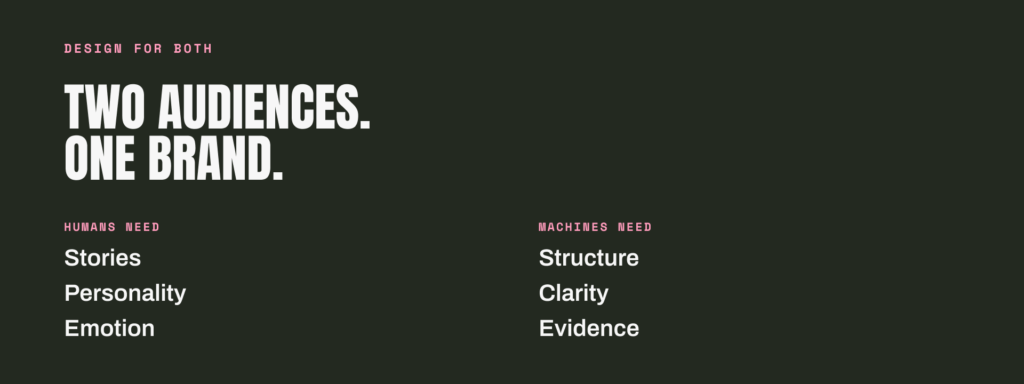
Perhaps the biggest takeaway from Follows’ thinking is that brands now need to be designed for two audiences simultaneously. Humans need stories, personality and emotion, while machines need structure, clarity and evidence: the businesses that thrive over the next few years will be those that successfully do both.
We had to rebuild our own digital story
Tracey Follows’ article resonated because it describes a challenge we’ve faced ourselves.
Studio Illicit grew from deliberately scrappy, creative roots. For years, our online presence celebrated bold web design, visual creativity and doing things differently. That positioning served us well, but our agency has grown into one that increasingly focuses on strategy and long term digital growth.
The problem wasn’t that our brand had radically changed, it was that the internet still contained several versions of it. Different platforms told different versions of our story, making it harder for both people and AI systems to understand what Studio Illicit has become.
So our challenge wasn’t reinventing who we were, but connecting those pieces into one coherent narrative. That work continues for our own business, and it’s exactly the process we’re now helping clients navigate. So what needs to be done?
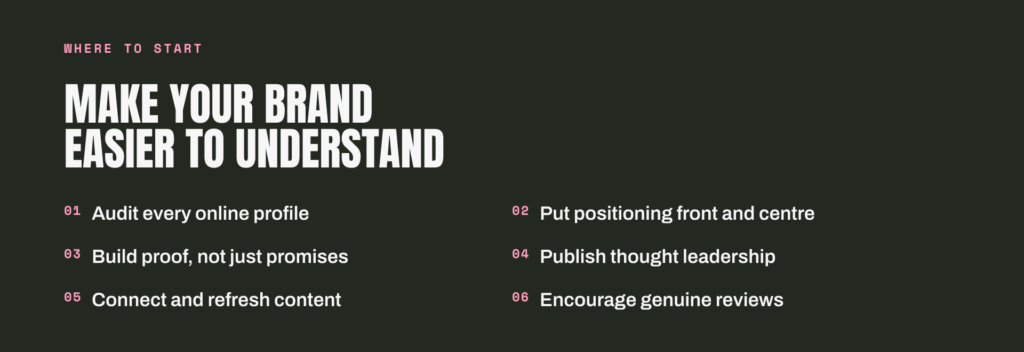
Making your own brand easier to understand
Audit every online profile
Your website is a core piece of your digital footprint, but there’s more to consider. Review your Google Business Profile, LinkedIn, Facebook, industry directories, review sites and any other listings. Make sure your messaging, services and positioning are accurate, consistent and up to date.
Put your positioning front and centre
Don’t make visitors or AI systems work out what you do. Your homepage should clearly explain who you help, what problems you solve and why you’re different. Reinforce this through headings, introductory copy, meta titles and meta descriptions.
Build proof, not just promises
Anyone can claim to be experienced or trustworthy, but you need the proof. Support your claims with case studies, testimonials, reviews, awards, client logos, certifications and hard results.
Publish thought leadership regularly
Helpful articles, opinion pieces and expert commentary help establish authority. They also create more signals for search engines and AI systems to understand your expertise.
Great places to contribute include: Medium, Substack, Featured, Qwoted, industry publications and trade magazines, relevant podcasts and webinars.
Connect and refresh your content
Every article should link to related services. Every case study should support your expertise. Every podcast appearance should point back to your website. Don’t create isolated pieces of content. Build a connected network that reinforces your authority.
AI systems don’t only read your latest blog, they often surface older content too. Update outdated pages, improve accuracy and ensure your messaging reflects where your business is today.
Encourage genuine reviews
Reviews are no longer just social proof. They are another source AI systems use when assessing reputation, expertise and customer satisfaction. Make collecting authentic reviews part of your ongoing marketing.
How Studio Illicit help
This shift sits at the intersection of branding, digital marketing and web design, which is exactly where we work. We help businesses understand how they appear across the whole web. That starts with auditing your online presence, identifying inconsistencies and uncovering missed opportunities. From there, we develop a clear strategy that reflects what makes your business unique and ensure it is communicated consistently across every platform.
Through branding, we can refine your positioning, create content that demonstrates genuine expertise and develop a strategy that makes your business easier for both people and AI systems to understand. And because your website is often the hub that connects everything else, we design and build websites that support that strategy from the ground up.
If your brand, website and online presence aren’t telling the same story, now is the time to fix it. We’d be happy to help.